Hello and welcome to Current, the newsletter that helps you navigate this new era of electricity. I’m your newsletter host, Catherine Morehouse Gernes.
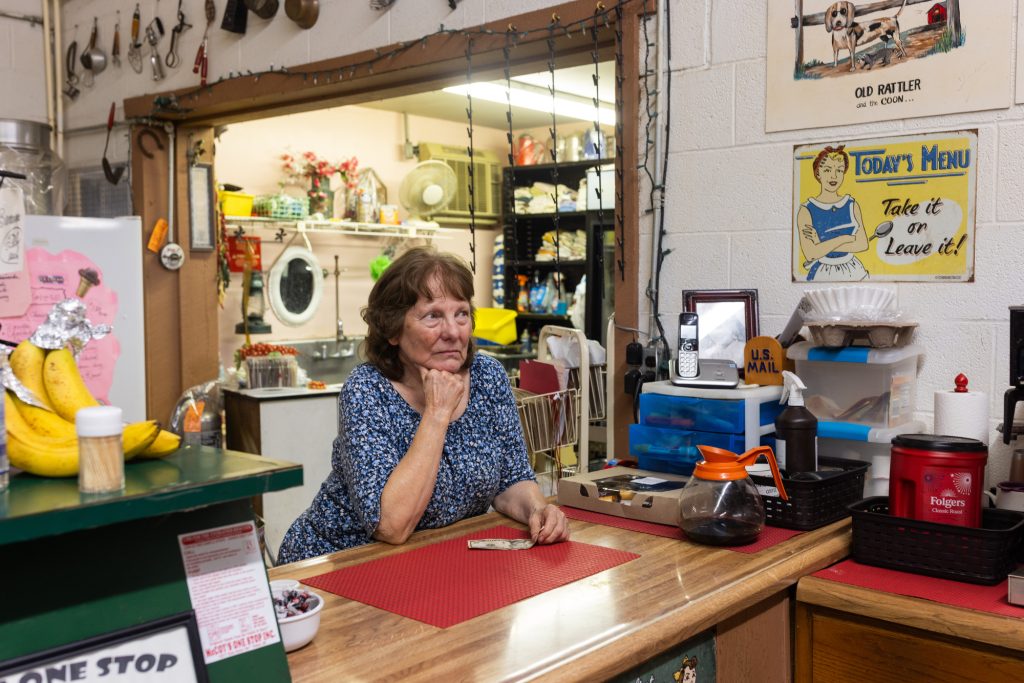
Image of the Week
Pauline (pictured) and her husband, Luchey McCoy, pay nearly $1200 for their electric bill, more than 3 times the mortgage on their restaurant and general store in Vinton, Ohio.
Maddie McGarvey for PowerLines.
Hot Topic: How 9 Incoming Governors Pledged to Tackle Energy Costs
One big thing to put on your radar
Voters have spoken. Across the country, new officials were elected—from governors’ mansions to state houses to Congress—as consumer concerns about rising costs reached a fever pitch.
Energy affordability was a top campaign issue. Candidate after candidate ran on explicit pledges to dramatically reshape the U.S. energy regulatory system for the betterment of consumers. They promised to lower energy costs, reform state public utilities commissions, and improve accountability and oversight over investor-owned utilities.
Now, the real test begins. We know governors in particular have the tools to lower costs for consumers in real time. Many of them pledged to do so. We’ll be watching closely to see if they turn those promises into policy action.
Here are a few newly elected governors—and their campaign pledges—that caught our attention:
Incoming Florida Governor Byron Donalds: Donalds blamed long permitting queues for holding up the infrastructure necessary to lower rising energy costs in the state. As part of his “FL Means Business” plan, he pledged to create a public-facing shot clock on all major energy permitting projects and make Florida “the most permitting-transparent state in America.”
Incoming Iowa Governor Rob Sand: Sand consistently heard voter concerns that the state’s growing share of data centers was threatening to drive up utility costs in the state. In response, he pledged to:
- Ensure data centers cover 100 percent of their own costs, preferably through firm legislation.
- Implement integrated resource planning, which the state does not currently have, to improve oversight on utility decisions and ensure utilities are choosing the lowest-cost resources available.
Incoming Maine Governor Hannah Pingree: Pingree called for concrete, systemic changes across the utility regulatory system, including:
- Tying utility profits to performance—including lower consumer bills, reliability, and ratepayer satisfaction—while directing the PUC to penalize poor service and reject unjustified rate hikes.
- Calling on the PUC to use “every tool available” to drive down bills, including realigning utility incentives, facilitating efficiency and electrification programs that lower rates, and squeezing more capacity out of existing grid infrastructure.
- Implementing a data center moratorium until the state can ensure new data centers will pay for the costs of the infrastructure needed to service them.
- Expanding targeted support to moderate- and low-income households.
Incoming Michigan Governor Jocelyn Benson: Benson focused her messaging on holding utilities accountable through a more transparent ratemaking process that prioritizes consumer affordability over utility profits. As part of that plan, she pledged to:
- Ban any rate increase that is tied only to utility profits.
- Increase outage credits for customers.
- Only allow utilities to earn maximum returns if they meet certain performance standards.
- Ban regulated utilities from spending money to influence or elect politicians.*
- Expand flexible payment plans to ensure residents can pay back overdue bills without threat of disconnection, and strengthen protections against winter shutoffs for vulnerable households.
- Ensure an “open, transparent, and accountable” appointment process for Public Service Commission regulators.
- Make data centers and other corporations responsible for the full costs of generation, transmission, and distribution needed to meet their needs, so those costs aren’t passed on to residential ratepayers.
Incoming Nevada Governor Aaron Ford: Ford pledged to fight utility cost increases and ensure data centers pay their fair share. His plan includes:
- Halting NV Energy’s mandatory demand charges, which add a fee to bills based on a customer’s peak usage.
- Appointing PUC commissioners committed to lowering consumer costs, and strengthening the commission’s ability to enforce legislation and protect ratepayers.
- Blocking data centers from passing energy costs onto average consumers.
- Directing state agencies to find new opportunities to lower energy costs and maximize state affordability programs.
Incoming Ohio Governor Amy Acton: Acton has a wide-ranging plan to protect consumers and lower rising energy costs. It includes pledges to:
- Expand access to cost-saving state programs.
- Appoint Public Utilities Commission of Ohio regulators who put consumers first.
- Restore the budget of the Office of the Consumers’ Counsel.
- Ensure data centers pay for the costs they incur on the grid system.
Incoming Oklahoma Governor Mike Mazzei: Mazzei is focused on keeping energy affordable in the state. He committed to:
- Requiring data centers to pay their fair share of the grid infrastructure needed to serve them to prevent shifting costs onto everyday consumers.
Incoming Texas Governor Gina Hinojosa: Hinojosa was highly critical of the state’s treatment of data centers, arguing more needed to be done to protect consumers. She pledged to:
- Direct the PUC to freeze rates until the state has rules in place to ensure data centers are paying for the costs they cause on the energy system.
- Establish a long-term plan to ensure the costs of infrastructure development are paid for by the companies that cause them.
Incoming Wisconsin Governor David Crowley: Crowley’s energy messaging focused narrowly on data centers. He pledged to ensure communities have the final say in whether to allow a data center or not. If they do, he said the developer must:
- Cover 100 percent of the costs of any grid or infrastructure upgrades.
- Contribute to a state energy fund that could be used to drive down Wisconsin energy rates.
*A ballot initiative in Michigan passed with 81 percent of the vote that prohibits utility and electric companies from making campaign contributions.
New and Notable
A roundup of other relevant energy developments
At the Polls: Artificial intelligence and data centers were a “crucial or major factor” to the majority of voters (56 percent) in casting their vote for Congress, according to an exit poll conducted by NBC News across 45 key states.
In North Carolina: A task force under the office of Governor Josh Stein released a report in October that found utility bills in the state could rise as much as 70 percent over the next 15 years, largely driven by the energy needs of new data centers. According to the state’s report, those large loads alone could add $50 billion in costs through 2050.
Stein is urging the North Carolina Utilities Commission to implement a large-load tariff that requires new large commercial projects to pay for the full costs of their impact on the grid system in order to protect consumers from rising costs. The state’s largest utility, Duke Energy, currently has a proposal in front of the commission that would ensure data centers pay the costs of grid infrastructure needed to serve them, but the governor’s office wants to ensure consumers are also protected from any costs incurred by additional power plants built to serve that new demand.
In Virginia: Officials in Virginia are at odds with the state’s largest utility, Dominion Energy, over its proposed merger with NextEra Energy.
Staff of the State Corporation Commission raised concerns in October testimony, that the merger would expose Dominion to the “additional financial and business risks” faced by NextEra, which operates competitively outside the regulatory system, unlike Dominion. Staff further argued that Dominion’s current commitments do not ensure the utility will “maintain the resources to provide adequate service to its customers post-[m]erger.”
But ultimately the commission’s staff said it would support the merger under two conditions: Dominion establishing an independent board of directors, and the utility maintaining the same in-state employee levels for at least the next decade.
Meanwhile, Governor Abigail Spanberger told state regulators she would not support the merger unless the utilities pledged to freeze base electricity rates for six years and nearly triple monthly bill credits. Attorney General Jay Jones also filed testimony opposing the merger, raising concerns that it would only raise energy costs in the state further.
In response, Dominion earlier this week filed its own testimony rejecting the rate freeze and staffing recommendations, but did accept some recommendations, including ensuring the Virginia-based company is the one to determine how it will meet rising load growth. Public testimony on the merger will begin Thursday, while the evidentiary hearing will begin on Nov. 17.
Docket Corner
New utility proceedings to keep an eye on
Xcel Energy filed a request to implement a two-year “Customer Rate Stability Plan” that would freeze rates through November 2028.
- Docket Number: 26-361 / 26-365
- Filed at: Minnesota Public Utilities Commission
- Filing Date: Oct. 9, 2026
Job Board
A snapshot of the latest PUC job postings
For a full list of job openings at commissions across the country, check out our full PUC Jobs Board.
- State Prog Admin Coordinator- Information Technology Solutions Manager — Minnesota Public Utilities Commission
- Attorney (PRC #4264) — New Mexico Public Regulation Commission
- SENIOR ATTORNEY – 61000209 — Florida Public Service Commission
- PUCT, Regulatory Accountant (Financial Examiner III-V) — Public Utilities Commission of Texas
- PUBLIC UTILITIES REGULATORY ANALYST V — California Public Utilities Commission
News You Can Use
- Amid a blue wave, voters rebuke monopoly utilities — Latitude Media
- Energy permitting reform likely path forward after Democratic midterms, says Wood Mackenzie — PV Magazine
- Democrats gain control of Georgia board that regulates utilities for first time in decades — Georgia Recorder
- Homeowners Fight Utilities Over Grid Upgrades in Their Backyards — The Wall Street Journal
- Electricity bills force 1 in 5 Americans to cut back on food, Consumer Reports finds — CBS News
- This Is What America’s Utility Bill Crisis Looks Like — The New York Times
- CenterPoint expands 10-year capital plan by $4B to handle load growth — Utility Dive
- 26 Ideas for Solving the Affordability Crisis — POLITICO Magazine
Have a question for one of our experts? Any suggested topics you’d like to see us cover? Feel free to send us your utility bill, share your story, or ask us a question: current@powerlines.org.
Have a specific question or tip for me? Get in touch: catherine@powerlines.org.
PowerLines is a nonpartisan consumer education nonprofit organization that aims to modernize the utility regulatory system for American energy consumers to lower utility bills and grow the economy.